
UK foreign policy human rights principles remain a core pillar of Britain’s international engagement. Across diplomacy, trade, security cooperation, and multilateral institutions, the United Kingdom consistently frames its global role around defending democratic values, civil liberties, and the rule of law. This approach shapes how Britain interacts with allies, rivals, and developing nations alike.
In an increasingly polarized world, human rights considerations continue to influence British foreign policy decisions, even when economic or strategic interests are at stake.
Historical Foundations of UK Human Rights Policy
Britain’s human rights–based foreign policy is deeply rooted in its post–World War II legacy. The UK played a central role in drafting the European Convention on Human Rights and was a founding supporter of the United Nations human rights framework.
Over decades, these commitments have evolved into formal obligations guiding diplomatic conduct, foreign aid distribution, and international partnerships. Human rights are not treated as optional ideals but as guiding principles embedded in policy formulation.
Human Rights as a Diplomatic Tool
Human rights diplomacy allows the UK to exert influence without direct confrontation. British embassies regularly raise concerns about political freedoms, press independence, minority protections, and judicial independence through diplomatic channels.
This approach enables Britain to:
- Maintain dialogue with governments under scrutiny
- Apply pressure through international coalitions
- Support reform while avoiding isolation strategies
Such engagement is especially visible in Britain’s relations with countries facing allegations of authoritarian governance or systemic rights violations.
Role of the Foreign, Commonwealth And Development Office (FCDO)
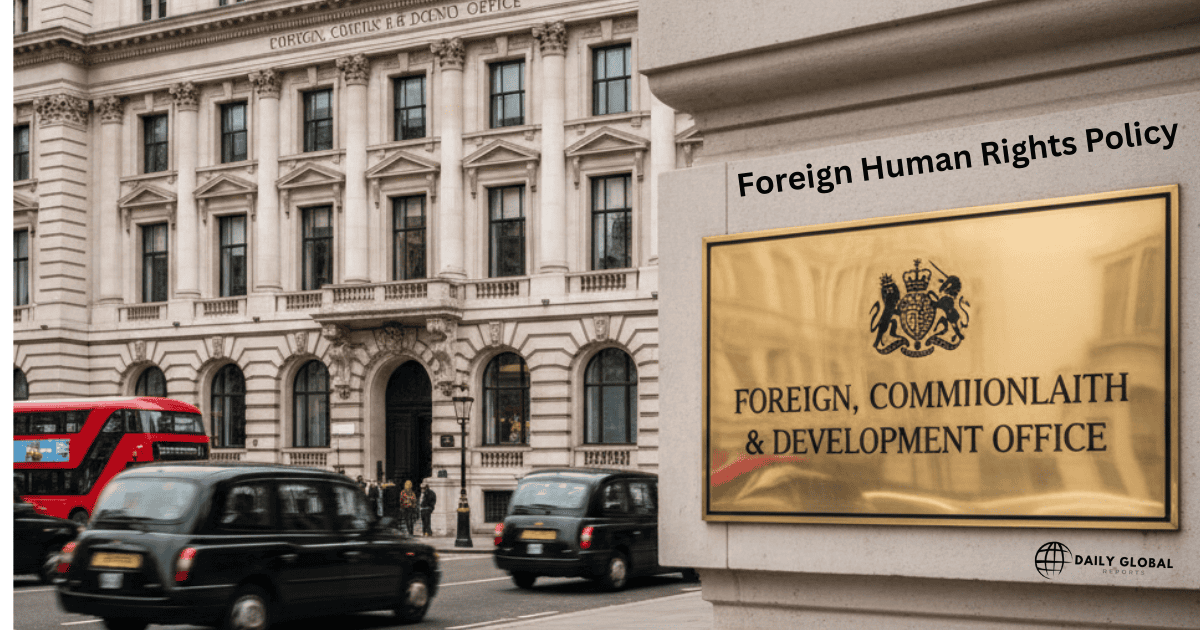
The Foreign, Commonwealth & Development Office (FCDO) serves as the institutional backbone of UK foreign policy human rights initiatives. It monitors global rights conditions, publishes annual human rights reports, and coordinates responses to emerging crises.
The FCDO also funds civil society organizations, election-monitoring missions, and legal reform programs worldwide. These initiatives aim to strengthen democratic institutions rather than impose external political models.
FCDO Human Rights and Democracy Report
Sanctions and Accountability Mechanisms
The UK has expanded its use of targeted human rights sanctions, particularly under the Global Human Rights Sanctions Regulations. These measures allow Britain to impose travel bans and asset freezes on individuals responsible for serious abuses.
This mechanism signals accountability while avoiding broader economic harm to civilian populations. It also aligns the UK with similar frameworks used by allies such as the United States and the European Union.
Trade Policy and Human Rights Balancing
Trade relationships often test the credibility of UK foreign policy human rights commitments. While Britain seeks economic partnerships, especially post-Brexit, human rights clauses are increasingly integrated into trade negotiations.
However, tensions remain when strategic trade partners face international criticism. Critics argue that enforcement must be consistent to preserve moral authority, while policymakers emphasize pragmatic engagement over isolation.
UK Government – Human Rights Are Key to Our Foreign Policy
Multilateral Institutions and Global Cooperation
The UK actively promotes human rights through multilateral institutions such as:
- The United Nations Human Rights Council
- The Commonwealth of Nations
- The G7 and G20 forums
Multilateral engagement allows Britain to amplify its influence, share responsibility, and coordinate responses to global crises, including conflicts, humanitarian emergencies, and democratic backsliding.
UNA-UK – UK’s Work with the United Nations
Challenges
Despite its commitments, UK foreign policy human rights efforts face several challenges:
- Geopolitical competition with authoritarian states
- Accusations of selective enforcement
- Balancing national security interests with ethical obligations
Domestic debates also influence international credibility, particularly when internal policies are scrutinized by global observers.
Future Strategy
Looking ahead, UK foreign policy human rights strategy is expected to focus on:
- Digital rights and online freedoms
- Protection of journalists and activists
- Accountability for war crimes and abuses
- Strengthening international legal frameworks
As global power dynamics shift, Britain’s ability to uphold human rights consistently will define its standing as a values-driven international actor.
Why UK Human Rights Policy Matters Globally
UK foreign policy human rights commitments extend beyond moral positioning. They influence global norms, support vulnerable populations, and reinforce international legal standards. In an era of rising authoritarianism, Britain’s stance contributes to broader efforts aimed at preserving democratic governance worldwide.