
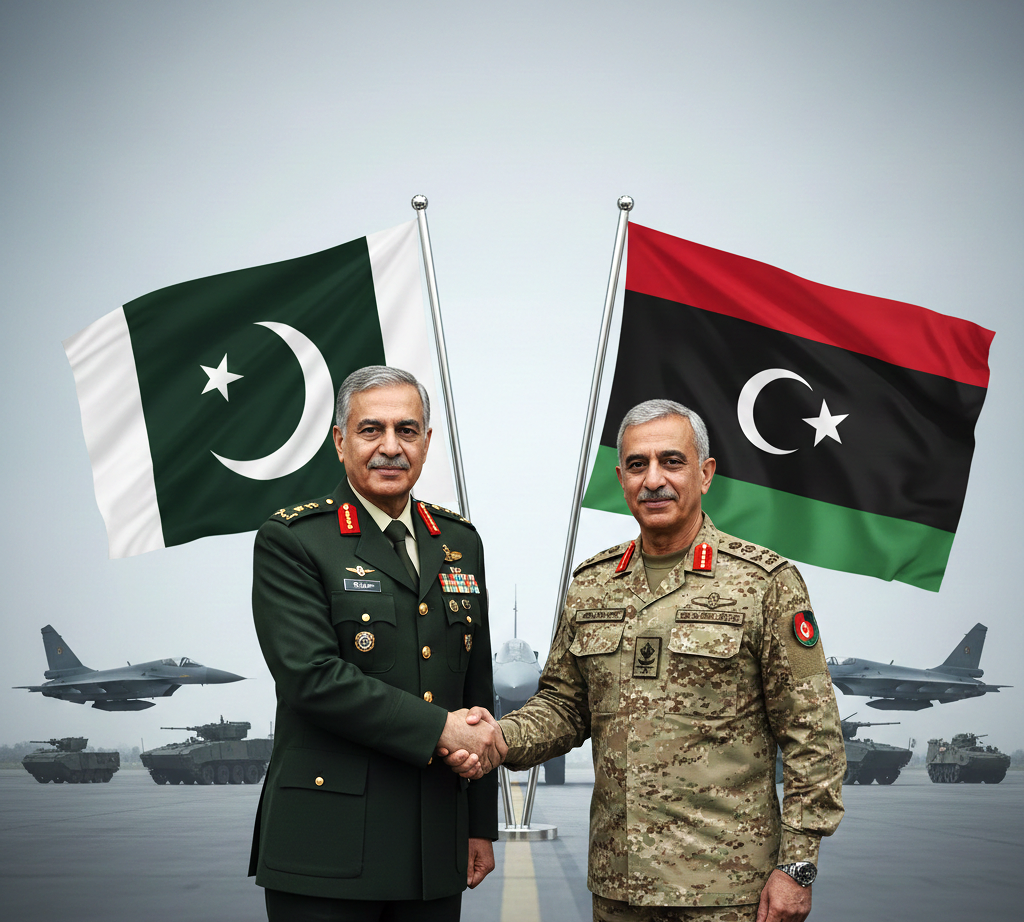
Pakistan and Libya have finalised a landmark defence agreement that is rapidly reshaping Islamabad’s foreign policy and defence export strategy, positioning Pakistan as a significant player in global military commerce. In late December 2025, Pakistan’s top military leadership, led by Chief of Defence Forces Field Marshal Asim Munir, concluded negotiations with senior Libyan military authorities in Benghazi to formalise a multi-billion-dollar arms and defence cooperation pact with Libya’s eastern-based Libyan National Army (LNA). According to multiple Pakistani officials familiar with the deal, the agreement is valued at more than $4 billion and is considered one of the largest conventional arms export contracts in Pakistan’s defence history. (Reuters)
Under the terms of the Pakistan-Libya agreement, Islamabad will supply a comprehensive package of military equipment and services, including advanced platforms such as 16 JF-17 Thunder multi-role fighter jets—co-developed with China—and 12 Super Mushak trainer aircraft, alongside a broader framework for joint training, defence manufacturing cooperation and capacity building for Libya’s armed forces. The deal is structured over approximately two and a half years and encompasses land, air and naval systems, reflecting Pakistan’s expanding defence industrial base and export ambitions. (Reuters)
Also Read About: Gold Price in Pakistan Today – Latest Updates
Strategically, this defence pact occurs against the backdrop of Libya’s protracted political fragmentation, with the eastern-based LNA controlling significant territory and resources while the western Government of National Unity remains internationally recognised. Pakistan’s officials have asserted that the agreement does not violate the long-standing United Nations arms embargo on Libya imposed since 2011, citing legal interpretations and practical enforcement limitations. Critics, however, raise concerns about adherence to international frameworks and the implications of supplying advanced military hardware into a fragmented conflict environment. (Reuters)
The Pakistan-Libya agreement not only signifies a strategic defence export milestone but also aligns with Islamabad’s broader geopolitical objectives. By diversifying its international defence partnerships beyond traditional markets, Pakistan aims to strengthen its economic self-reliance while enhancing diplomatic ties in North Africa. This development follows Islamabad’s deepening security ties with Gulf partners in 2025 and reflects a concerted strategy to elevate Pakistan’s profile in global defence diplomacy. (quwa.org)
Also Read: Pakistan Stock Exchange: Latest Market Update Today