
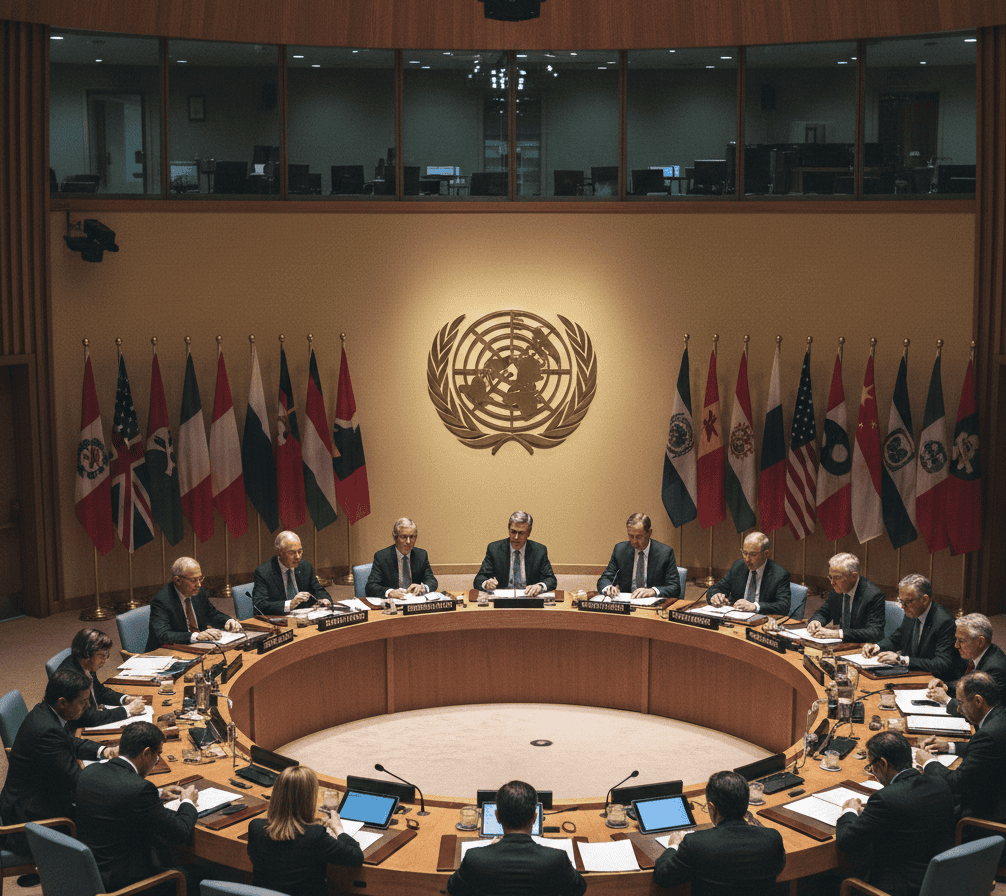
UN Security Council (UNSC) will convene an emergency meeting at 3:00 p.m. local time (8:00 p.m. GMT) to address the deteriorating security situation in Ukraine following repeated missile and drone strikes, including the use of the Oreshnik ballistic missile. The session will focus on the maintenance of international peace and security and examine potential measures the global community may adopt to prevent further escalation. (Українські Національні Новини (УНН))
Why the Emergency Meeting Was Called
The emergency UNSC session was requested by Ukraine after a series of recent attacks on urban centres and critical infrastructure. Russian forces reportedly used the Oreshnik intermediate-range ballistic missile in western Ukraine — a significant escalation that has caused civilian harm and triggered widespread international concern. Kyiv and its diplomatic partners argue that such strikes warrant urgent action rather than symbolic statements. (Українські Національні Новини (УНН))
Ukraine’s Permanent Representative to the UN, Andriy Melnyk, emphasized that Ukraine expects “effective mechanisms of influence on the aggressor” from the international community, not solely formal declarations. The meeting’s convening was backed by several UNSC members, including Great Britain, France, Greece, Denmark, Latvia, and Liberia. (Українські Національні Новини (УНН))
Context: Recent Escalation in Hostilities
The emergency meeting takes place against the backdrop of:
- Expanded Russian missile and drone strikes across multiple Ukrainian regions. These attacks have severely damaged energy infrastructure, causing heating outages in Kyiv’s sub-zero winter conditions. (NST Online)
- Humanitarian impacts, including civilian deaths, massive displacement, and critical infrastructure damage. International humanitarian agencies have consistently reported rising needs within Ukraine, emphasizing the urgency of protective action. (The United Nations in Ukraine)
These developments have intensified calls for the UNSC to adopt tangible measures to uphold international law and deter further violations of the United Nations Charter. (The United Nations in Ukraine)
What the UNSC Meeting Will Address
Key issues expected during the 12 January session include:
- Assessment of the current security situation in Ukraine and its implications for regional stability.
- Debate on possible UN actions, including condemnation of attacks and consideration of future resolutions.
- Examination of international humanitarian law compliance and the protection of civilians under the Geneva Conventions.
- Diplomatic pressure and deterrence strategies to prevent further escalation and uphold global peace and security.
The Emergency Meeting will also intersect with ongoing debates about enforcement mechanisms under the UN framework, which historically faces challenges when permanent members exercise veto rights. For background on the UNSC and its role in international peace, refer to the Council’s structural overview. (See this backgrounder by the Council on its mission and structure.) (Council on Foreign Relations)
Also read our latest article: UK Foreign Policy Human Rights | Britain’s Global Role
International and Political Implications
This meeting occurs amid sustained diplomatic efforts to support Ukraine and deter aggression:
- Prior Western summits have explored security guarantees and cooperative defence mechanisms.
- International human rights bodies and humanitarian agencies continue to document civilian impacts and press for protective measures.
The outcome of the 12 January session could influence subsequent United Nations General Assembly debates, broader diplomatic negotiations, and bilateral dialogues among key stakeholders, including NATO states and EU partners. For comprehensive analysis of these dynamics, see the United Nations General Assembly Resolution ES-11/7 on a just and lasting peace in Ukraine. (Wikipedia)
How This Fits Into Broader Efforts Toward Peace
The Security Council’s intervention aligns with longstanding UN commitments to peaceful dispute resolution, as outlined under Chapter VI and VII of the UN Charter, and seeks to reinforce global norms against indiscriminate attacks on civilian populations. Prior UNSC briefings and statements by the UN Secretary-General have emphasized the importance of upholding humanitarian law and securing negotiations toward a cessation of hostilities. (The United Nations in Ukraine)
Click Here for more posts like this.
External Resources for Further Reading
- United Nations official UN Security Council background and mandate overview.
- United Nations General Assembly Resolution ES-11/7 on Ukraine peace principles.
- Official UN statements and humanitarian briefings on Ukraine’s situation.